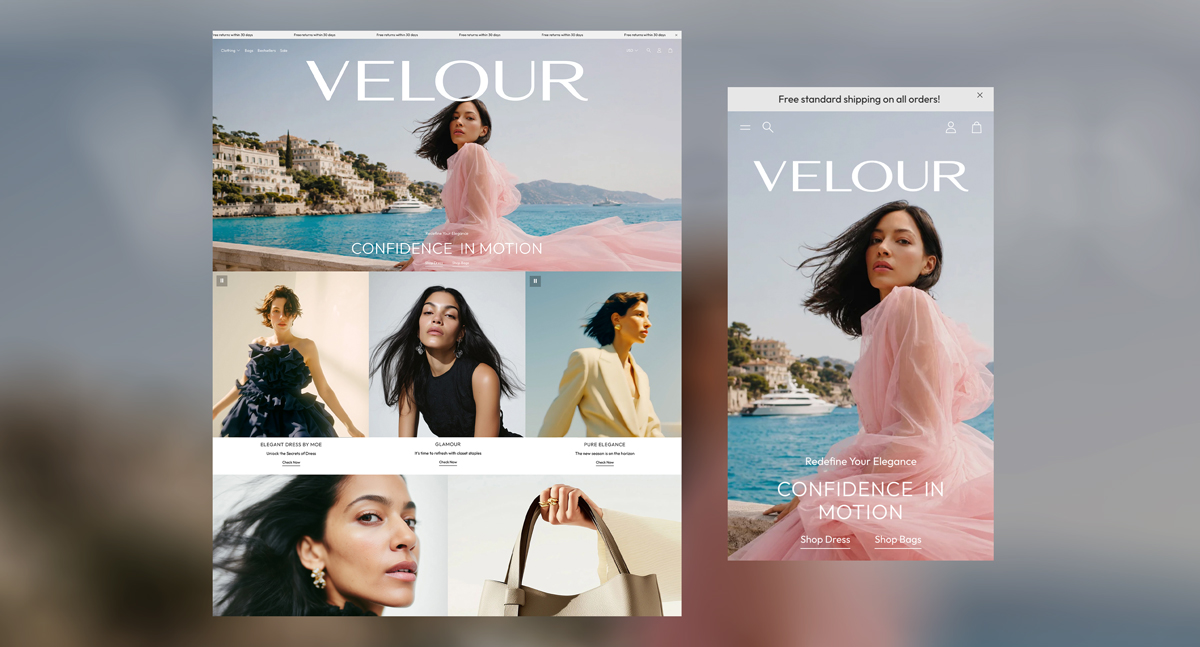
Velour is a useful example because the fashion and lifestyle use case makes the changes easy to see. Product cards, collection browsing, merchandising, cart behavior, and mobile product discovery all matter more when the product depends on photography, styling, and context.
In this release, Wonder Theme adds new sections, major product-card improvements, stronger merchandising tools, AI-ready enhancements, and practical UX, performance, and quality-of-life improvements for merchants. The update also includes AI Ready (UCP), CRO Cart, Product Bundles Sections, Product Quiz Sections, Shopify Subscriptions Widget, and new conversion-focused sections.
This is not only about how the theme looks. It is about giving Shopify brands a stronger commercial foundation.
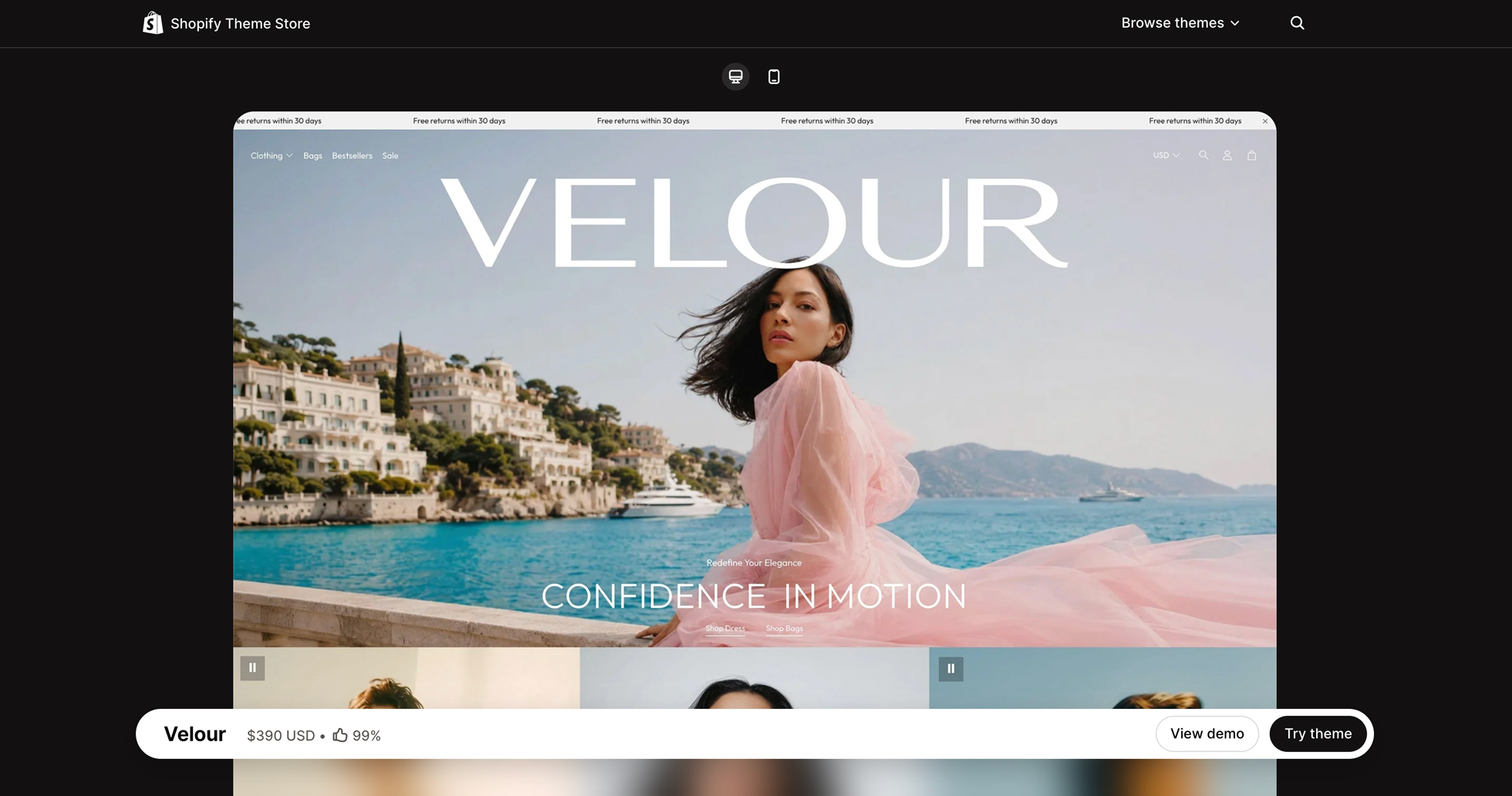
The most important change is that Wonder Theme now gives merchants more built-in tools for guiding customers through the store: from product discovery, through variant comparison, to add-to-cart and checkout.
The update strengthens several areas:
These are not only design improvements. They affect how quickly a team can prepare campaigns, build collections, test offers, and maintain a cleaner Shopify setup without adding a separate app for every basic sales scenario.
Velour is the Wonder Theme preset designed for fashion, accessories, lifestyle, and premium DTC brands. In this preset, the update is especially visible because the customer journey depends heavily on product presentation.
Velour now works better with:
For premium and fashion brands, the product should not disappear inside too many modules. The layout needs to guide attention: image first, collection context next, then product, variant, price, supporting information, and CTA.
Wonder Theme already includes a broad feature set for conversion and merchandising. On the Shopify Theme Store page, Velour lists features such as quick buy, slide-out cart, sticky cart, cross-selling, recommended products, quick view, product badges, promo banners, popups, FAQ, trust badges, countdown timer, and stock counter.
With 2.5.0, the commercial layer becomes stronger through CRO Cart, bundle sections, quiz sections, Shopify Subscriptions Widget, and additional conversion-focused sections.
These features solve concrete ecommerce problems:
The goal is not to add more visual noise. The goal is to reduce friction in the places where customers decide whether to keep browsing, add to cart, or leave.
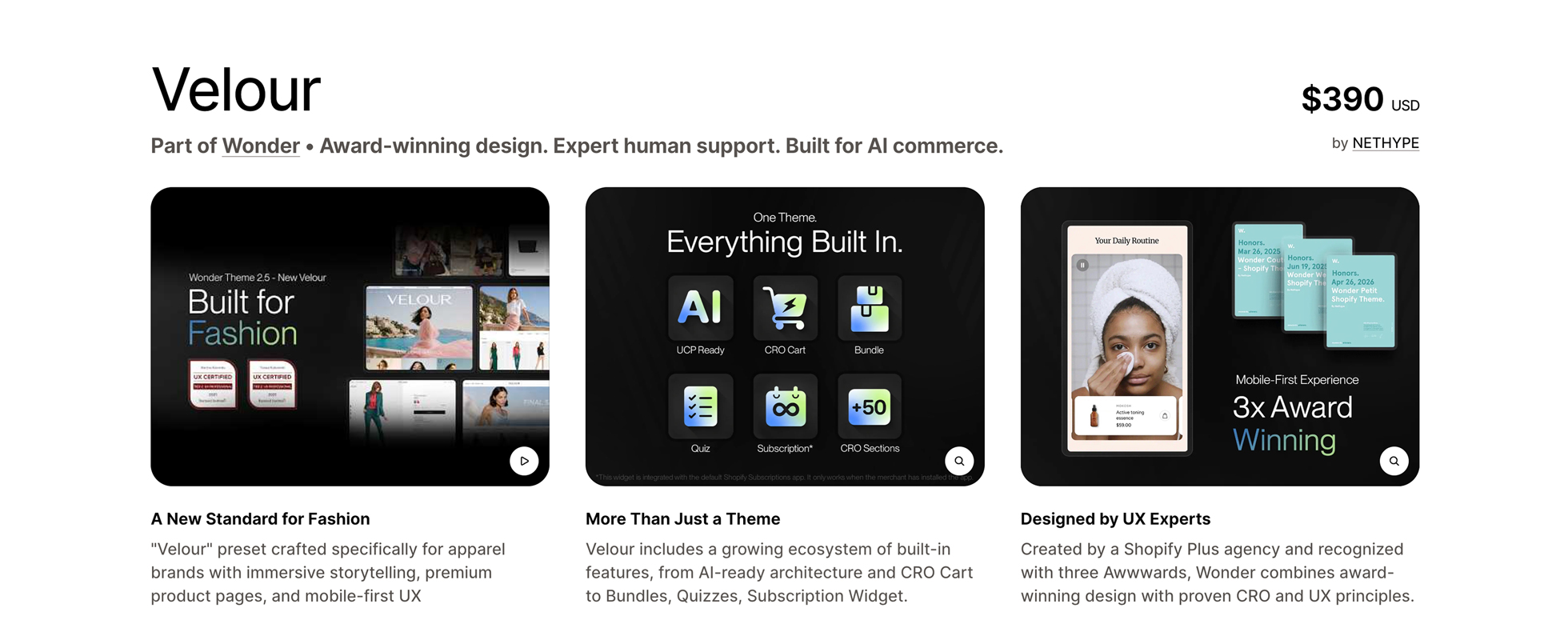
One of the most practical parts of this update is how Wonder Theme handles product cards and category browsing.
On a category or collection view, shoppers can add a product to cart using the plus icon without opening the product page. They can also swipe through product images directly on the product card, without leaving the listing.
This sounds small, but it is a real UX improvement. A customer can inspect a product faster, compare more items, and add to cart without being forced into a product-page visit every time.
For fashion and lifestyle stores, this matters a lot. Customers often need to see the product from more than one angle before deciding whether to open the full product page. Giving them that interaction on the listing page makes browsing feel faster and more informed.
Wonder Theme also supports product discovery through collection navigation, featured collection tabs, search, mega menu, filtering, sorting, sticky header, swatches, and variant filters.
If customers cannot quickly narrow the choice, inspect images, compare variants, or add a product to cart without unnecessary page transitions, the store loses sales through small but repeated friction points.
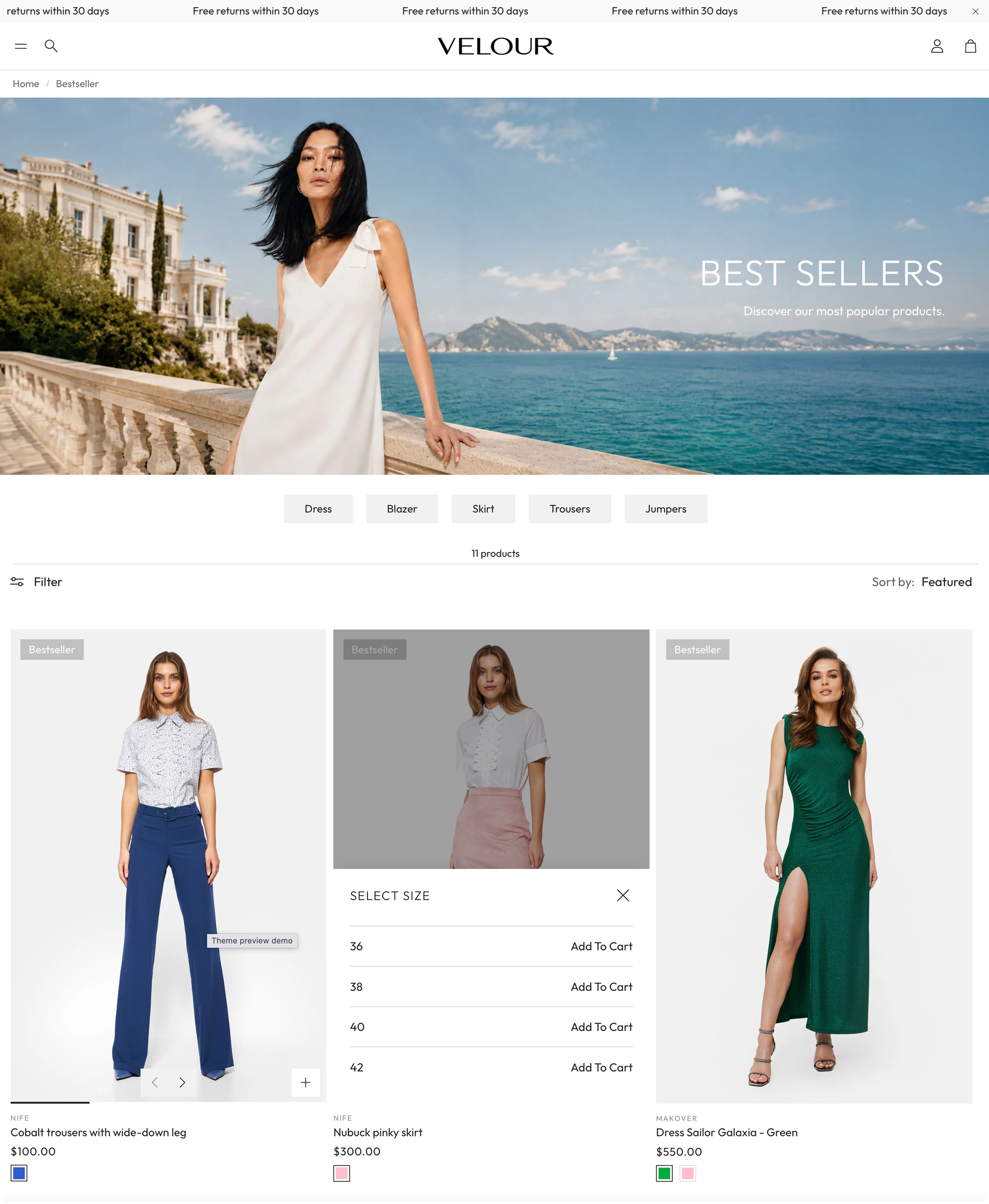
The value of Wonder Theme 2.5.0 is also visible in merchandising. The theme supports product variants, color and image swatches, size charts, product tabs, galleries, image zoom, rollover, hotspots, product videos, lookbooks, shoppable images, shoppable video, and before/after sliders.
These features matter because many products need more context than one image and a price. In fashion, beauty, home, and lifestyle, customers often need to understand material, fit, routine, scale, texture, variants, usage, or comparison before buying.
Velour shows this clearly. It gives products more visual room, while still keeping the purchase structure readable.
Wonder Theme 2.5.0 is especially useful for brands that want to build or redesign a Shopify store faster without starting from a blank custom build.
It makes the most sense for brands that:
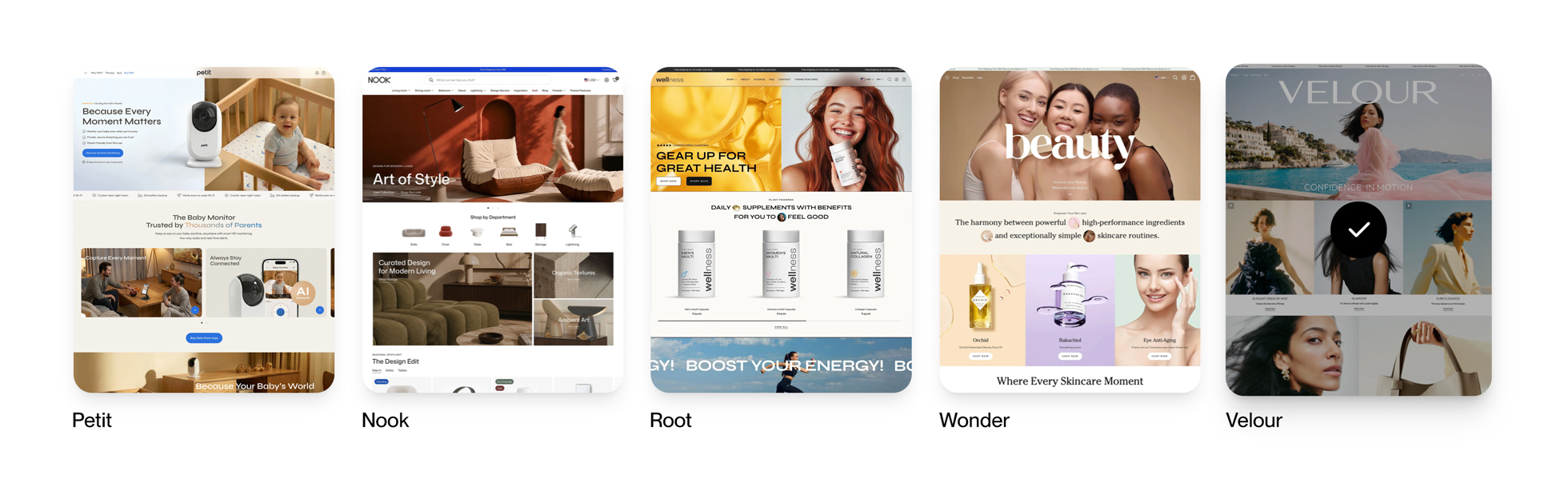
Velour is a natural fit for fashion, accessories, lifestyle, and premium DTC brands. Root fits wellness, supplements, and health brands better. Nook is stronger for home, interiors, furniture, and decor. Petit works well for focused one-product stores, simple offers, and conversion-first launches. Wonder remains the more flexible default preset.
More features do not mean the store should use everything at once.
Before implementing Wonder Theme 2.5.0, a brand should decide:
The best result does not come from using the highest number of modules. It comes from choosing the right features for the category, product, and buying behavior.
Wonder Theme 2.5.0 is a bigger update than a single visual change. It develops all presets and strengthens the core ecommerce experience: merchandising, product cards, category browsing, cart behavior, subscriptions, bundles, quizzes, and conversion-focused sections.
Velour is a strong example because it shows how these features can work in a premium fashion or lifestyle store: clearer product discovery, faster category browsing, stronger product context, and fewer unnecessary steps before add-to-cart.
For brands planning a Shopify redesign or migration, Wonder Theme is not just a good-looking starting point. It is a structured base for building a store faster, keeping the UX cleaner, and scaling the storefront with fewer custom decisions from day one.
Send us your current Shopify store or redesign plan. We can show whether Wonder, Velour, Root, Nook, or Petit is the strongest starting point for your category and product strategy.
Contact Nethype · info@nethype.co